Nickel-metal Hydride vs Lithium-ion: Which Rechargeable Battery Fits Your Product?
Compare nickel-metal hydride vs lithium-ion batteries for OEM products, including voltage, safety, cost, charging and use cases
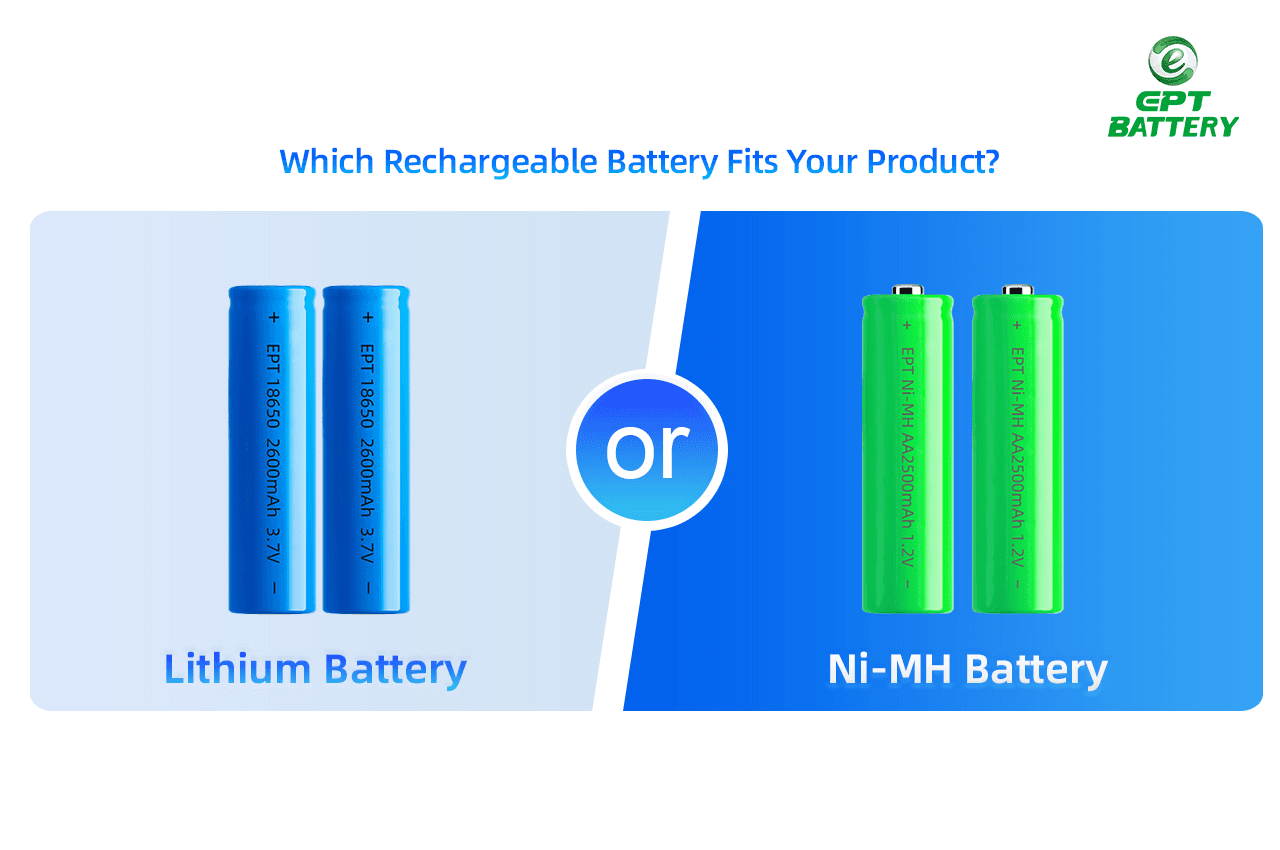
Nickel-metal hydride vs lithium-ion is not a simple old-versus-new battery debate. Both battery chemistries still make sense when they fit the product.
Lithium-ion batteries usually offer higher energy density and lighter pack design. Nickel metal hydride batteries can still be useful in AA or AAA formats, cost-sensitive devices and products that need stable rechargeable performance without a complex lithium pack.
For OEM teams, the better question is practical: What does your product need more, compact energy or rechargeable compatibility?
Quick Answer: Which Chemistry Should You Choose?
Choose lithium-ion when energy density, light weight, and custom pack design matter most.
Choose nickel metal hydride when standard cylindrical formats, moderate cost, simpler handling, and broad rechargeable replacement behavior matter more.
Neither chemistry is automatically better. A cordless personal care product, toy, tool, robot, scanner or backup device may favor different design priorities.
Authoritative reference: Battery University comparison of battery chemistries
Voltage and Energy Density Differences
Voltage is one of the first differences between nickel metal hydride and lithium-ion cells.
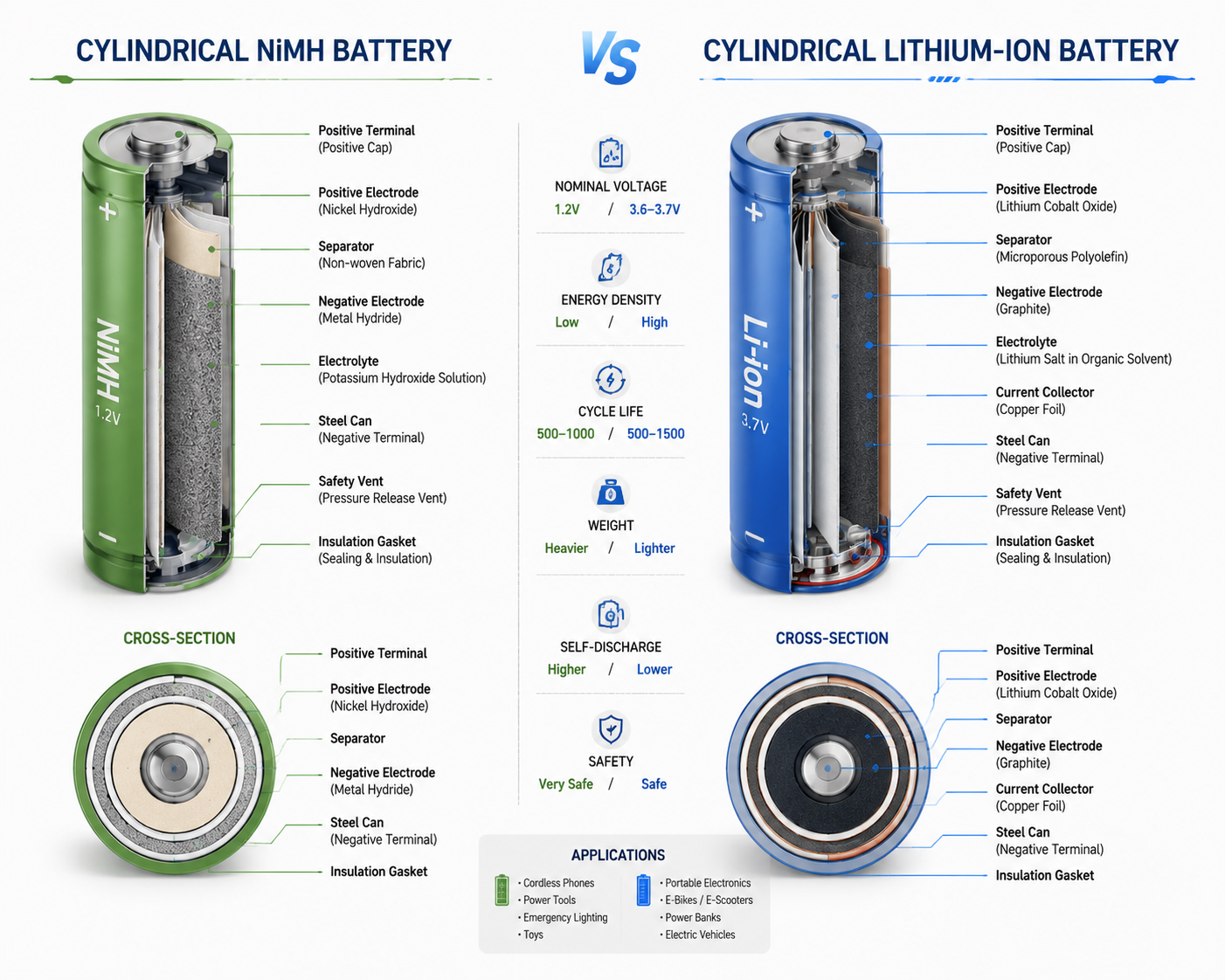
A Ni-MH cell usually has a nominal voltage of 1.2V. That makes it common in AA and AAA rechargeable formats. A lithium-ion cell often has a nominal voltage around 3.6V (LCO) or 3.7V (NMC), depending on the specific chemistry and cell design.
Energy density is another difference. Lithium-ion usually stores more energy in less weight and volume. That makes it attractive for compact products, mobile electronics, robots and devices where space is limited.
Ni-MH may still be a good fit when the device is designed around AA or AAA cells, or when a lower-voltage rechargeable solution is easier to integrate.
Charging, Safety and Protection
Charging requirements differ sharply between these chemistries.
Lithium-ion batteries need tighter voltage control and usually require a protection circuit or BMS. The pack design should address overcharge, over-discharge, overcurrent and temperature conditions.
Ni-MH charging typically relies on constant current with –ΔV (negative delta V) cutoff, temperature cutoff (ΔT), or a timed charge, depending on the charger design.
For products already built around AA or AAA rechargeable behavior, EPT's 1.2V AA 1000mAh Ni-MH USB rechargeable batteries are a relevant example. The product page lists AA 1000mAh and AAA 400mAh models with a 1.2V rated voltage, 5V/80mA charging current and a 4-5 hour charging time via the built-in LED indicator.
Cost, Service Life and Replacement Behavior
Cost is not only the cell price.
A lithium-ion pack may need BMS design, pack assembly, testing and a matched charger. It may reduce weight and size, but it can add engineering complexity.
Ni-MH batteries may be easier to use in products designed around replaceable AA or AAA cells. They can also reduce the waste and replacement cost associated with disposable alkaline batteries.
The EPT Ni-MH USB rechargeable page also lists a built-in smart LED indicator and two charging methods: a dual Micro-USB cable or universal chargers. Those details matter when the user experience depends on simple charging rather than a custom pack.
Application Fit: Where Each Chemistry Works Better
The right chemistry depends on the application.
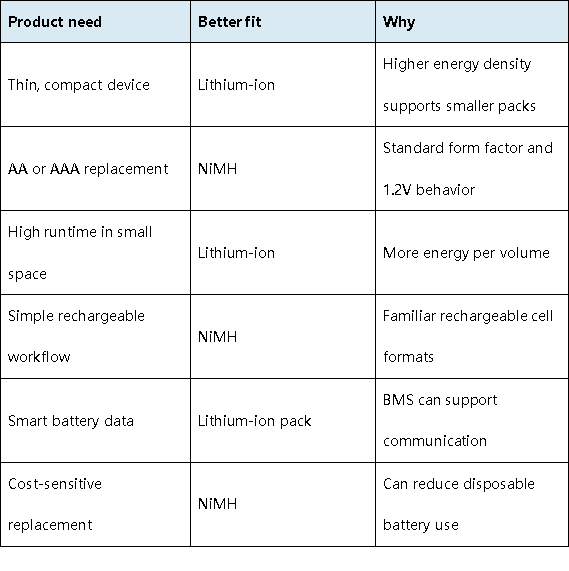
When lithium-ion Is the Better Product Choice
Lithium-ion is often the better choice when the product needs compact energy and engineered pack behavior.
Examples include smart devices, scanners, POS terminals, robots, e-bikes and portable electronics. These products often need more voltage, more energy density, BMS protection or custom pack shapes.
For lithium-ion product categories, EPT's cylindrical lithium battery and cell page is a useful internal reference. For thinner custom formats, EPT's lithium polymer batteries page fits many compact-device discussions.
The trade-off is engineering work. Lithium-ion packs should be designed with protection, charging, thermal behavior and compliance in mind.
When Ni-MH Is Still a Strong Choice
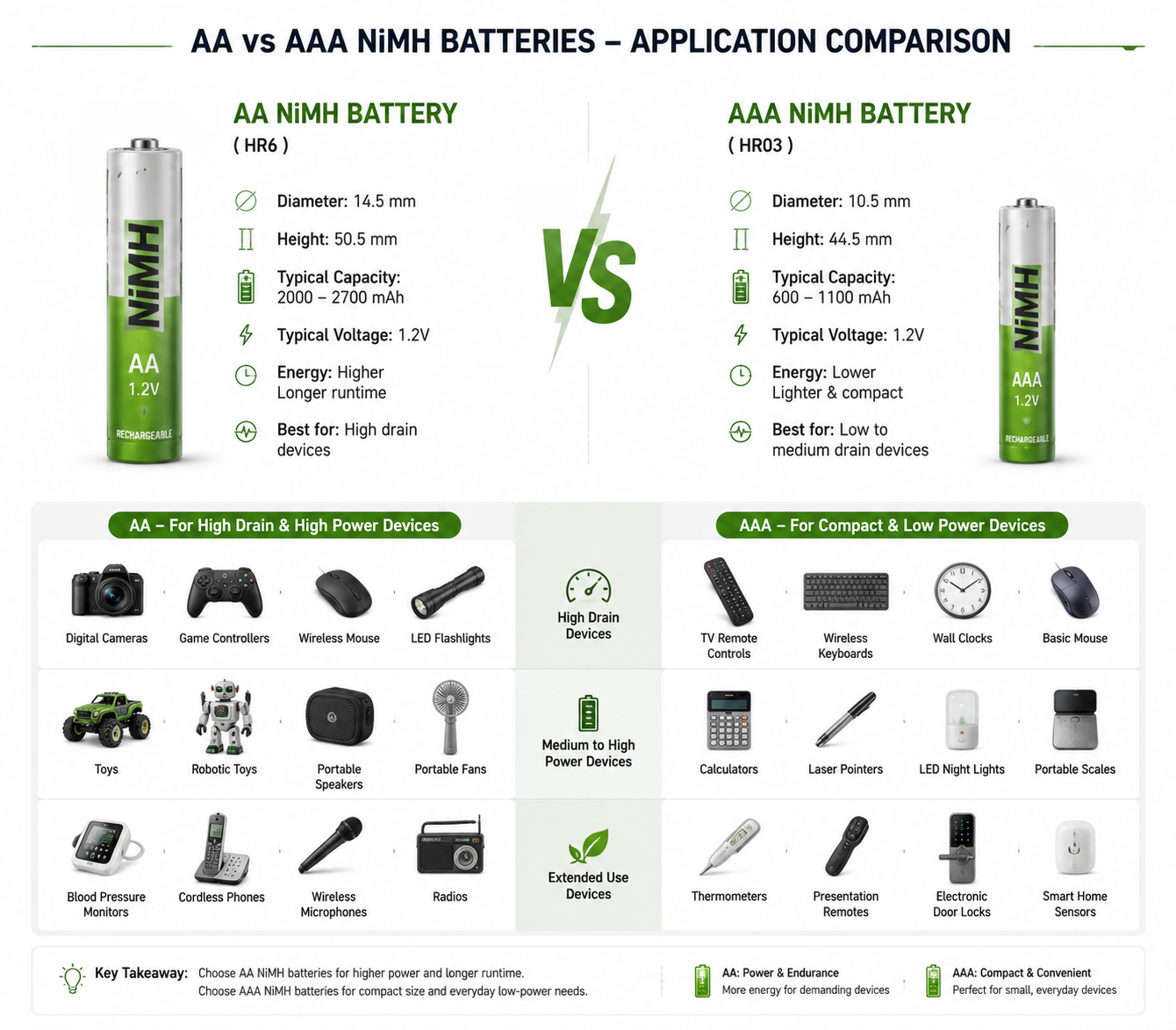
Ni-MH is still useful when the product needs a rechargeable cell in a familiar format.
AA and AAA Ni-MH batteries fit many tools, toys, testing devices, handheld products and facility equipment. They can reduce disposable battery replacement without forcing a full lithium pack redesign.
Ni-MH can also be a practical option when the product does not need high energy density or smart battery communication. If the device already works well with a 1.2V rechargeable cell, keeping the design simple may be the best choice.
Supplier Questions Before Choosing Chemistry
Before choosing Ni-MH or lithium-ion, ask suppliers for chemistry-specific answers. For Ni-MH, confirm rated capacity, charging method, expected cycle behavior and whether the cell fits the device's voltage window. For lithium-ion, confirm BMS design, charger requirements, protection functions and pack dimensions.
You should also ask about production consistency. A rechargeable battery that works in one sample but varies across batches can create field complaints. For OEM programs, sample testing should include discharge curves, temperature behavior and charging repeatability.
The chemistry choice should support your product plan, not just the highest capacity number. A good supplier will help you compare electrical fit, mechanical fit and long-term service behavior.
This supplier discussion gives the article stronger EEAT value because it connects chemistry theory with real procurement evidence.
FAQ
Is lithium-ion better than nickel metal hydride?
Lithium-ion is better for high energy density and compact packs. Ni-MH can be better for AA or AAA rechargeable replacement use.
Can Ni-MH replace lithium-ion?
Usually no. The voltage, charging method, energy density and pack design are different.
Is Ni-MH safer than lithium-ion?
Ni-MH is generally less demanding in protection design, but every rechargeable battery still needs the correct charger and use conditions.
Which battery is better for OEM products?
It depends on voltage, size, runtime, cost, charging method and safety requirements.
Nickel metal hydride vs lithium-ion is a product-fit decision. Lithium-ion supports compact, high-energy, custom pack designs. Ni-MH supports familiar rechargeable formats and simpler replacement workflows.
Before choosing, define the voltage, space, runtime, charging method and user behavior. Then match the chemistry to the product instead of forcing the product around the battery.
Related News
Related Articles
Day 3 at the 140th Canton Fair: EPT BATTERY Connects with Global Customers to Explore Battery Innovation
Read Full Article
EPT-Battery at Hong Kong Electronics Fair 2026: Battery Solutions for AI Devices and Smart Living
Read Full Article