Lithium-Ion Battery Pack Design: Cells, BMS, Housing, and Communication Options
Learn how lithium-ion battery pack design integrates cells, BMS, housing and communication options for OEM electronic products.
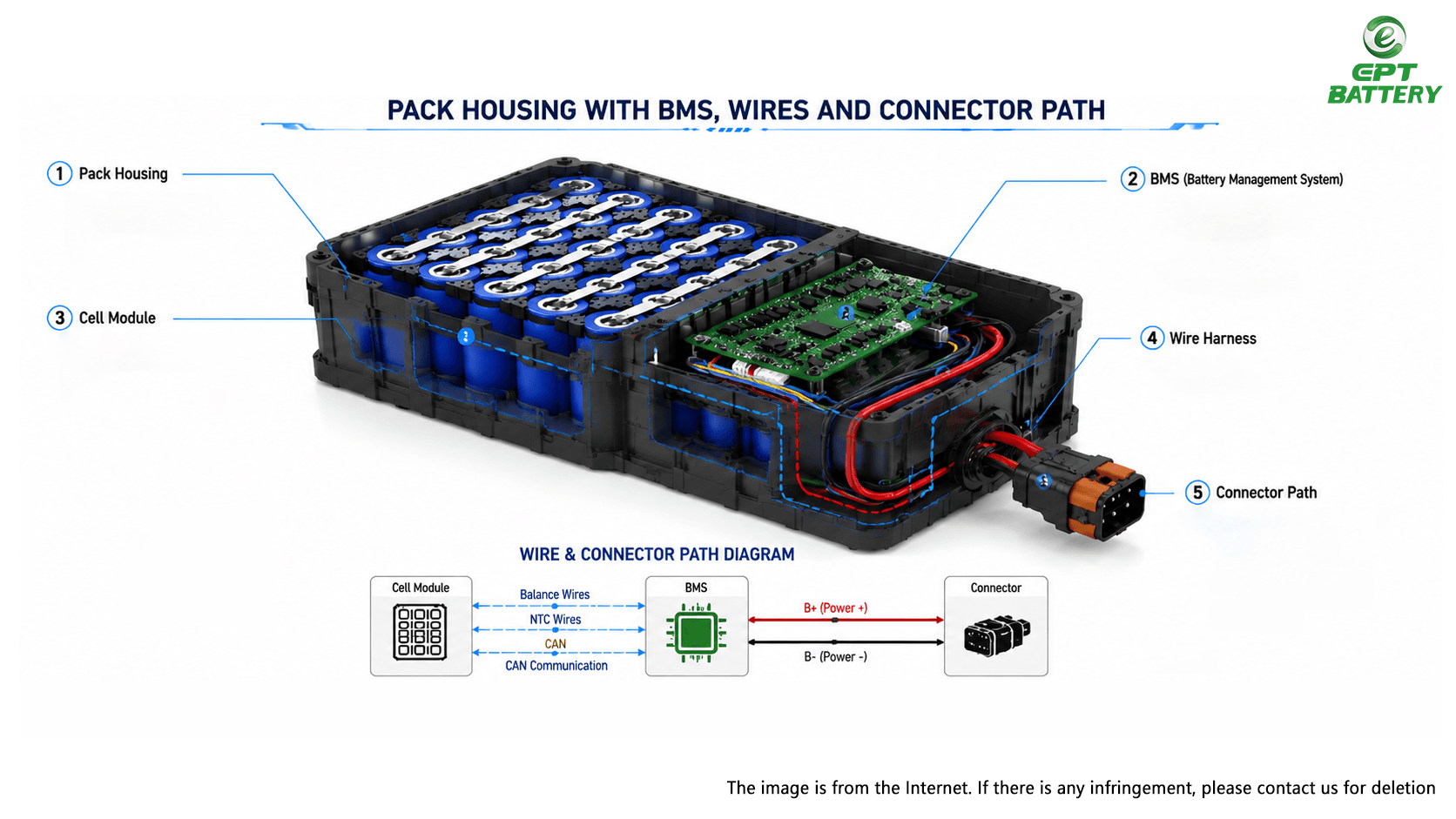
A lithium-ion battery pack is not just a group of cells wrapped together. It is a system that must fit the product, deliver power safely and behave predictably during charging, storage and daily use.
For OEM projects, pack design affects everything from runtime and heat to service life and customer trust. A robot, scanner, POS terminal or medical device may use lithium-ion chemistry, but each needs a different balance of cell format, BMS protection, housing and communication.
This guide explains the main design decisions before you source or customize a lithium-ion pack.
Start With the Product Load, Not the Cell
Good lithium-ion battery pack design starts with the device.
Before choosing cells, define the product's voltage, current, runtime, charging method, temperature range and space limits. A pack that looks strong on paper may fail if it cannot handle motor startup current, long standby drain or tight housing constraints.
Ask practical questions:
· What is the nominal pack voltage?
· What is continuous and peak current?
· How long should the device run?
· How will the pack charge?
· Does the host need battery data?
· Where will the pack sit inside the product?
Cell Selection: Format, Capacity and Consistency
Cell selection affects capacity, discharge behavior, size and pack reliability.
Cylindrical cells such as 18650 are common in packs that need proven formats and modular assembly. Pouch lithium polymer cells can fit thin or irregular spaces. The best choice depends on product structure and current demand.
Consistency matters as much as headline capacity. Cells in the same pack should have well-matched performance, especially when connected in series or parallel. Poor matching can lead to uneven discharge, early cutoff or heat.
For cylindrical-cell projects, EPT's cylindrical lithium battery and cell category is a useful internal reference. For compact custom shapes, EPT's lithium polymer batteries category shows another common direction.
BMS Design: Protection and Pack Intelligence
The BMS is the control layer that helps the pack stay inside its design limits.
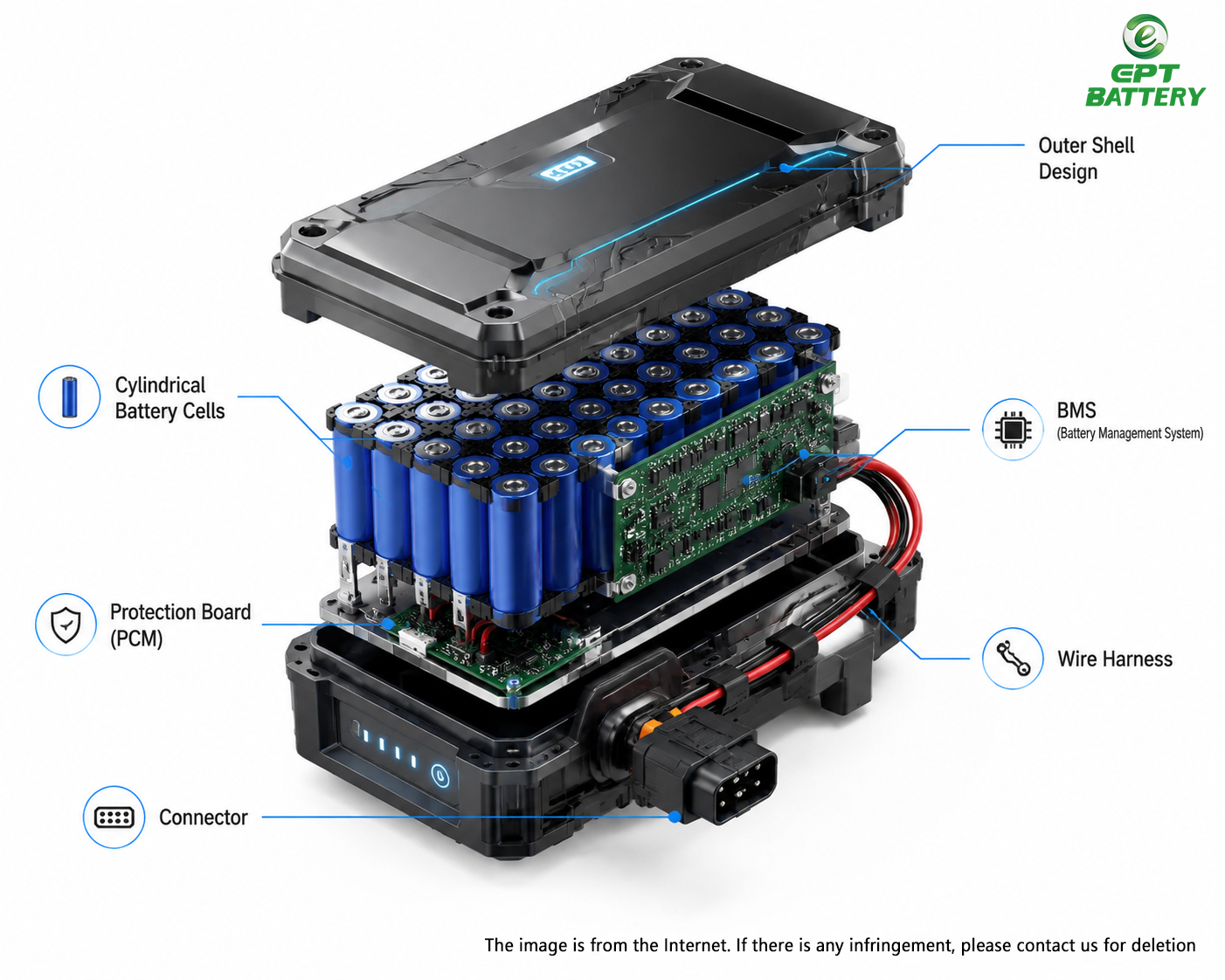
Common BMS functions include overcharge protection, over-discharge protection, overcurrent protection, short-circuit protection and temperature monitoring. Multi-cell packs typically require cell balancing (passive or active) to keep State of Charge even across cells..
More advanced battery packs can include communication, such as I2C/SMBus or UART (RS-232/RS-485), depending on the host system. Communication lets the device read battery status, fault signals or state-of-charge information.
Authoritative reference: U.S. Department of Energy lithium-ion battery overview
Housing, Wiring and Connector Choices
Mechanical design can decide whether a pack succeeds in production.
The housing must protect cells, BMS components and wiring while fitting the product. It should account for vibration, compression, heat, assembly tolerances and connector strain.
Connector choice should match current, space and service needs. A connector that is easy to assemble but too weak for the load can become a failure point. Wire routing also matters because sharp bends or pinched wires can damage insulation.
In small devices, housing and PCB layout often compete for space. Engineers should review pack drawings early instead of treating the battery as a final drop-in part.
Communication Options for Smart Battery Packs
Communication should be used when the host product needs battery data.
A simple pack may only need basic protection. A robot or industrial device may need state-of-charge, state-of-health, temperature or fault information. Communication can help the device manage charging, schedule maintenance or avoid unexpected shutdowns.
EPT's recommended 37V 10.4Ah 18650 lithium battery pack for intelligent robot is a useful example. The product page lists I2C communication, a 37V nominal voltage, 10.4Ah capacity, 10S4P configuration, 42V charging cutoff and 30V discharge cutoff. It also lists BMS protection against overcharge, over-discharge, discharge over-current and short circuit.
That type of pack is relevant when the host device needs more than power. It needs data.
Lithium-Ion Battery Pack Design Checklist
Use this checklist before locking a pack design.

Common Pack Design Mistakes
The most common mistake is choosing cells before defining the device load.
Another mistake is ignoring peak current. A pack may handle average load but shut down when a motor starts or a wireless module transmits.
Teams also underestimate mechanical design. Battery packs fail when wires rub, housings compress cells or connectors move during vibration.
Finally, do not add communication just because it sounds advanced. Smart battery data is valuable only when the host device can use it.
Validation Tests Before Production
A lithium-ion battery pack should be validated before tooling or mass production. Early tests should include charge behavior, discharge performance, peak current, thermal rise, connector strength and BMS fault response.
For smart packs, communication should also be tested with the host device. The device should read battery data correctly, respond to warning states and shut down safely when the pack reaches its limits.
Mechanical checks matter too. Review whether the pack moves inside the housing, whether wires rub against sharp edges and whether the connector can survive repeated assembly. These details often decide whether a technically correct pack becomes a stable production part.
Record the test method, sample size and failure criteria so later design changes can be compared against the same baseline.
FAQ
What is in a lithium-ion battery pack?
It usually includes cells, BMS or protection circuit, wiring, connector, insulation and housing.
What does 10S4P mean?
It means 10 cells in series and 4 cells in parallel, giving 40 cells total in a 10S4P pack. The exact layout depends on the pack configuration..
Does every pack need communication?
No. Communication is useful when the host product needs battery data, fault status or state-of-charge information.
Why does housing matter?
Housing protects the cells and electronics from vibration, compression, heat and assembly damage.
Final Thoughts
Lithium-ion battery pack design is a system decision. Cells, BMS, housing and communication choices must work together.
Before sourcing a pack, define the product load, space, charger, safety needs and data requirements. That gives your battery supplier a clear path to recommend a practical pack design.
Related News
Related Articles
Best Lithium Batteries for e-bikes in 2026: What to Know Before You Buy
The best lithium battery e-bike pack in 2026, including voltage, capacity, BMS, certification and real riding needs.
Read Full Article
EPT-Battery at Hong Kong Electronics Fair 2026: Battery Solutions for AI Devices and Smart Living
Read Full Article